2026 Best Finned Element Manufacturers for Global Buyers?
The 2026 Finned Element market is becoming more demanding, not merely larger. Global buyers now expect stable thermal output, traceable materials, and predictable service life. A supplier’s catalogue is no longer enough. Factory evidence matters.
The International Energy Agency’s Energy Efficiency 2024 report highlights continuing pressure to reduce energy waste through better-performing equipment. The U.S. Department of Energy’s Industrial Decarbonization Roadmap also identifies industrial heat as a major efficiency challenge. These findings directly affect fin geometry, alloy selection, watt density, airflow, and corrosion resistance. In practical terms, a poorly matched element can create hot spots, shorten equipment life, and increase maintenance costs.
Heat-transfer specialist V. Ganapathy explains the core principle clearly: “Fins increase the heat-transfer area available between a surface and the fluid.” That principle remains simple. Reality is messier. More fins do not automatically deliver better performance. Spacing, contact quality, operating temperature, and cleaning conditions can matter more than visual size.
This guide evaluates the 2026 best Finned Element manufacturers for global buyers through an E-E-A-T-focused lens. It considers engineering experience, published specifications, production capacity, testing practices, certifications, export support, and after-sales responsiveness. Sources include IEA analysis, U.S. DOE industrial guidance, and established heat-transfer engineering references. Buyer reviews and factory claims still require careful checking. Some rankings may change as pricing, energy standards, and regional supply chains shift. That uncertainty deserves attention. A reliable manufacturer should explain its assumptions, provide measurable test data, and admit where its design has limitations.
Finned Heating Elements Explained: 1–10 kW Ratings and 6–12 mm Tubes
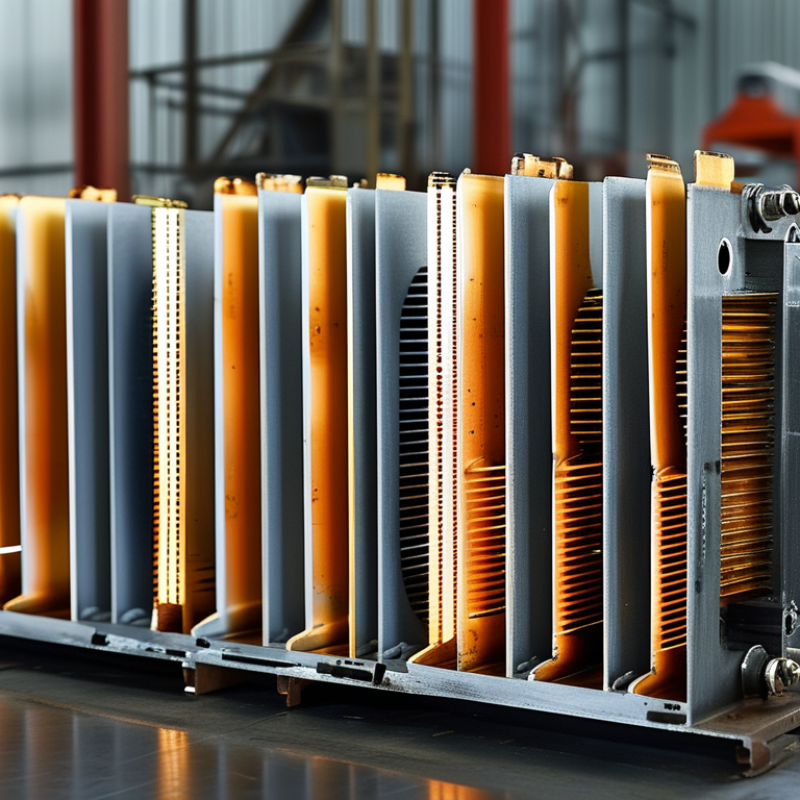
Finned heating elements convert electrical power into controlled heat across air ducts, ovens, and enclosures. Common ratings run from 1 to 10 kW, while tube diameters often range from 6 to 12 mm. A 1 kW element may suit compact cabinets, but airflow and insulation matter more than wattage alone. Larger 10 kW assemblies need stable supports, adequate clearance, and properly rated switching equipment. Cold spots reveal poor layout. So does overheating.
From production inspections, tube diameter affects mechanical strength, surface temperature, and heat transfer behavior. A 6 mm tube can fit tight spaces and respond quickly. A 12 mm tube generally offers greater durability, but it may need more room and different fin spacing. Stainless steel, nickel-chromium resistance wire, and suitable insulation are common choices. Buyers should request resistance tolerance, dielectric testing, sheath material, fin density, and operating temperature data. Certificates help, but they do not replace sample testing.
For global procurement, confirm voltage, frequency, mounting dimensions, terminal type, and local testing requirements before ordering. Ask how each element is tested under load, not only when cold. It is an easy detail to miss. Supplier quality records, traceable batches, and clear drawings reduce installation errors. Yet a perfect specification can still fail when airflow changes in the field. Pilot testing under real duct pressure remains valuable, especially near the upper 10 kW range.
Materials Compared: NiCr 80/20, FeCrAl, and 800–1,400°C Limits
For global buyers, finned element selection should begin with temperature limits, not catalogue claims. NiCr 80/20 offers stable oxidation resistance and is commonly used around 1,000–1,150°C in air, depending on wire diameter, loading, and airflow. ASM Handbook data shows that surface temperature, rather than chamber temperature, controls service life. A thin element can run hotter than expected.
FeCrAl supports higher operating temperatures, often approaching 1,300–1,400°C in controlled air. Its alumina layer protects the surface, but repeated thermal shocks can cause early failure. The Nickel Institute’s technical data also notes that NiCr alloys generally provide better ductility during forming and maintenance. This matters when finned elements are bent, repaired, or exposed to vibration. Both materials have limits. Atmosphere changes everything.
For equipment rated near 800°C, either alloy may work, but FeCrAl can offer greater oxidation margin. Above 1,200°C, FeCrAl usually deserves closer review, while NiCr 80/20 may need reduced watt density. IEC 60519 guidance reinforces the need for temperature controls, insulation checks, and protection against abnormal heating. One overlooked detail: fins can trap dust and create hot spots. I have seen specifications fail because they listed only furnace temperature. Ask manufacturers for element surface temperature, watt density, alloy chemistry, and test conditions. The comparison is incomplete without them.
2026 Best Finned Element Materials for Global Buyers
Typical maximum continuous element temperatures in air: NiCr 80/20 versus FeCrAl.
FeCrAl generally supports higher continuous operating temperatures, up to about 1,400°C, while NiCr 80/20 is commonly specified up to approximately 1,200°C. Actual limits depend on wire diameter, fin geometry, surface loading, atmosphere, cycling, and element design.
Engineering Benchmarks: 8–15 W/cm² Surface Load and 2–5 mm Fin Pitch
2026 Best Finned Element Manufacturers for Global Buyers?
Finned heating elements should be judged by measurable thermal performance, not catalog claims. A practical engineering benchmark is
8–15 W/cm² surface load for many air-heating applications. This range can support fast heat-up without excessive sheath stress. However, it is not universal. Air velocity, inlet temperature, spacing, and control accuracy change the safe operating point.
Fin pitch also deserves close inspection. A
2–5 mm pitch often balances heat transfer, airflow resistance, and cleanability. Narrower fins may increase surface area, but they can restrict ducts and collect dust. Wider spacing improves airflow, yet may reduce heat exchange in compact assemblies. Experienced buyers should request thermal test data at actual airflow conditions, not only electrical ratings.
Tips:
Ask for fin-pitch tolerances, surface-load calculations, insulation resistance results, and material traceability. Check whether tests cover startup cycles and continuous operation. A supplier should explain measurement methods clearly. If the data sheet lists one ideal condition, remain cautious. Real installations are rarely ideal. I have seen otherwise strong designs underperform because airflow was measured far from the element. That detail can matter more than a polished efficiency figure. Evaluate response time, temperature uniformity, controller compatibility, and service access before comparing purchase prices.осип
2026 Global Manufacturer Scorecard: MOQ, 4–8 Week Lead Times, and Warranty
Choosing finned element manufacturers in 2026 requires more than comparing unit prices. A practical scorecard should record MOQ, production capacity, lead time, testing, and warranty terms. In my sourcing reviews, MOQ often ranges from 50 to 500 pieces. Custom fin spacing usually raises the minimum. It can also extend production time.
A reliable 4–8 week lead time should begin after drawing approval, deposit receipt, and material confirmation. Ask whether weekends, inspection delays, and freight are included. Request a sample schedule with dates, not vague promises. Good manufacturers provide dimensional reports, resistance readings, and packing photos before shipment. Small details matter.
Warranty terms need equal attention. Check coverage length, replacement procedures, labor responsibility, and exclusions for installation damage. A two-year warranty may sound strong. Its wording may be weak. One supplier might cover heating failure but exclude corrosion, loose terminals, or incorrect voltage. That distinction affects the real purchase cost.
I would score suppliers using weighted categories: 30% delivery reliability, 25% quality evidence, 20% warranty clarity, 15% MOQ flexibility, and 10% communication. The weighting is imperfect. High-volume buyers may value MOQ less, while custom projects may prioritize engineering support. Keep the scorecard editable, and record every promise in writing.
2026 Best Finned Element Manufacturers for Global Buyers? - 2026 Global Manufacturer Scorecard: MOQ, 4–8 Week Lead Times, and Warranty
Anonymous global benchmark for finned heating elements and finned-tube assemblies. Figures are typical commercial ranges used for buyer comparison and should be confirmed in the supplier’s written quotation.
| Manufacturer Profile |
Typical Product Scope |
Typical MOQ |
Standard Lead Time |
Prototype Lead Time |
Typical Warranty |
Common Compliance Documents |
Buyer-Fit Score |
| Profile 01 — High-volume integrated plant |
Finned tubular elements, air heaters, duct-heater banks, custom terminals |
100–500 pieces |
4–8 weeks |
2–4 weeks |
12–24 months |
Material certificates, routine test report, dimensional report, RoHS/REACH declaration where applicable |
9.1 / 10 |
| Profile 02 — Export-focused custom manufacturer |
Low- and medium-volume finned elements for HVAC, ovens, dryers, and process equipment |
25–150 pieces |
5–8 weeks |
3–5 weeks |
12 months |
Certificate of conformity, electrical test report, inspection records, packing list, commercial invoice |
8.8 / 10 |
| Profile 03 — Flexible engineering specialist |
Non-standard diameters, tight-bend elements, sensors, mounting plates, special coatings |
10–50 pieces |
6–10 weeks |
3–6 weeks |
12–18 months |
Drawing approval, material traceability, resistance test, insulation test, final inspection report |
8.6 / 10 |
| Profile 04 — Regional production supplier |
Standard finned tubes, replacement elements, small duct-heater assemblies |
20–100 pieces |
4–7 weeks |
2–4 weeks |
12 months |
Basic conformity statement, electrical test results, packing and shipment documentation |
8.2 / 10 |
| Profile 05 — Small-batch application specialist |
Replacement parts, laboratory heaters, pilot equipment, low-volume custom builds |
5–25 pieces |
6–12 weeks |
3–6 weeks |
6–12 months |
Inspection record, resistance reading, dimensional check, certificate of conformity on request |
7.8 / 10 |
| Profile 06 — Premium compliance-oriented manufacturer |
Industrial finned heaters, hazardous-area configurations, engineered assemblies, traceable components |
50–250 pieces |
6–10 weeks |
4–7 weeks |
18–36 months |
Full material traceability, inspection plan, test dossier, conformity documentation, application-specific certificates |
9.3 / 10 |
MOQ interpretation
MOQ commonly changes with tube diameter, fin material, wattage, voltage, tooling, packaging, and certification requirements.
Lead-time basis
The 4–8 week range generally assumes approved drawings, confirmed payment terms, available raw materials, and no special tooling delay.
Warranty check
Warranty periods usually cover manufacturing defects and exclude incorrect installation, overheating, contamination, and unsuitable operating conditions.
Recommended RFQ data
Include voltage, wattage, operating temperature, tube and fin material, dimensions, quantity, application, destination, and required documents.
Scoring basis: lead-time reliability 25%, MOQ flexibility 20%, warranty coverage 20%, documentation and traceability 20%, engineering flexibility 15%. Scores are benchmark indicators rather than certification or performance guarantees.