Top Ceramic Heater Manufacturers for Global Buyers

Choosing reliable Ceramic Heater manufacturers requires more than comparing prices or browsing attractive product photos. Global buyers need evidence of material quality, thermal performance, production consistency, and after-sales support. A heater may look identical on paper, yet perform differently inside a drying cabinet, vehicle system, air purifier, or industrial enclosure.

The foundation begins with ceramic science. W. David Kingery, a respected authority in ceramic materials, wrote, “Ceramics are materials that are made from inorganic, nonmetallic materials by the action of heat.” This principle matters because firing temperature, formulation, and bonding methods influence insulation, durability, and resistance to thermal shock. Small differences can become costly failures.

This guide examines leading Ceramic Heater manufacturers serving international buyers. It considers PTC elements, alumina components, infrared designs, custom assemblies, testing procedures, certifications, and production capacity. It also reviews practical details, such as connector quality, temperature uniformity, packaging protection, and response time during technical support.

No ranking is perfect.

Factory size does not guarantee better engineering. A smaller supplier may offer stronger customization, while a large producer may provide more stable volume and documentation. That trade-off deserves attention. Buyers should request test reports, sample units, operating curves, and clear warranty terms before committing to large orders. Supplier claims should be checked against measurable performance.

The manufacturers discussed here are assessed through an experience-based lens. Product reliability, communication quality, traceability, and application knowledge all matter. The strongest partner is not always the cheapest one. It is the supplier whose Ceramic Heater continues working when temperature, vibration, moisture, and deadlines become less forgiving.
Top Ceramic Heater Manufacturers for Global Buyers

Ceramic Heater Technology and Product Categories

Ceramic heaters generate heat through ceramic elements, but their behavior depends on element design and airflow. PTC elements increase electrical resistance as temperature rises, which can help regulate output. They do not replace proper thermal safeguards. In a fan-assisted unit, warm air passes across the element and exits through a grille. A blocked intake can still reduce performance.
This matters.

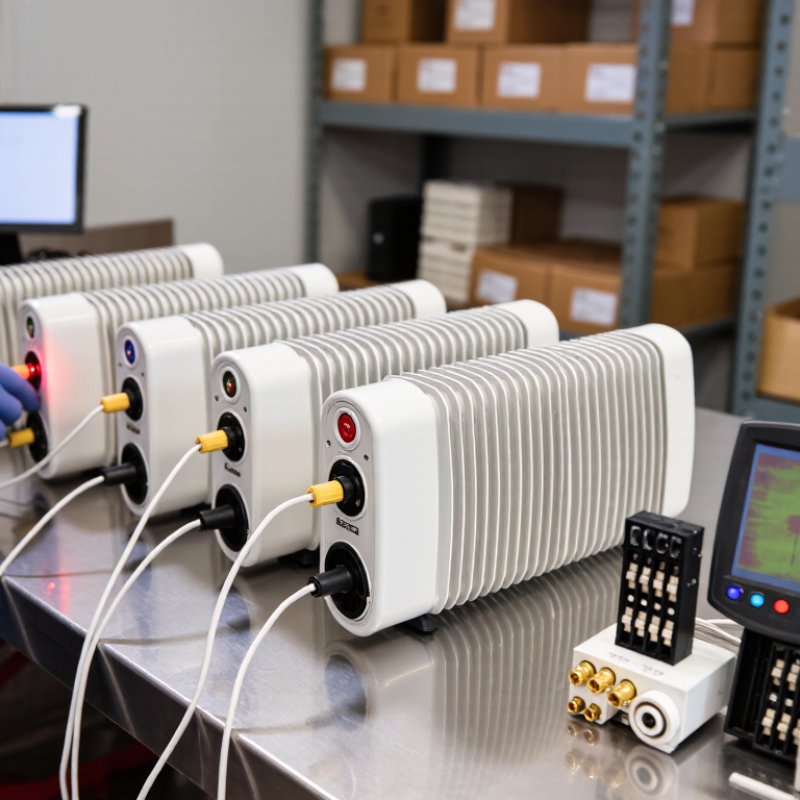
Buyers commonly compare PTC fan heaters, ceramic infrared panels, and industrial ceramic band or nozzle heaters. PTC units can suit localized air heating in enclosures or small rooms. Infrared panels warm people and surfaces more directly, so placement and line of sight affect comfort. Band and nozzle heaters transfer heat to process equipment; fit, watt density, and insulation need careful review. Compare voltage, output, temperature range, duty cycle, mounting space, and replacement-element availability. A heater that works on paper may struggle in dusty, vibrating, or poorly ventilated conditions. Field installations can be messier than specification sheets suggest.

Tips: Match the heater to the load, not just its wattage. Check airflow, clearances, and control response before installation.

Key Criteria for Evaluating Ceramic Heater Manufacturers

When evaluating ceramic heater manufacturers, begin with engineering evidence, not polished catalog images. The U.S. Department of Energy’s Energy Saver guidance states that electric resistance heaters convert nearly 100% of incoming electricity into heat at the point of use. This makes component quality especially important. Ask for heating curves, wattage tolerance, thermal uniformity data, and continuous-operation test results. A stable ceramic element should heat evenly, without dark hotspots, odor, or repeated power fluctuations.

Safety documentation must be specific. Confirm testing against relevant IEC 60335 requirements, insulation ratings, overheat protection, and production traceability. The IEA’s Energy Efficiency 2023 report recorded global energy-intensity improvement of about 2.1% in 2022. Buyers therefore need suppliers that measure efficiency under realistic conditions, not only in short laboratory demonstrations. Request test temperatures, airflow settings, sample quantities, and failure criteria. Demand evidence.

Manufacturing experience appears in small details. Check whether technicians inspect ceramic density, terminal strength, coating adhesion, and thermal cycling. Ask how rejected parts are isolated and how corrective actions are recorded. Samples lie. One successful prototype proves little. I would also compare warranty claims, replacement rates, and independent laboratory reports across several production batches. A supplier may offer a low price, yet inconsistent resistance values can increase field failures and energy waste. The evaluation should remain practical, skeptical, and repeatable.

Top Ceramic Heater Manufacturers for Global Buyers - Key Criteria for Evaluating Ceramic Heater Manufacturers

Evaluation criterion What to assess Evidence to request Practical buyer check
Product and application fit Whether the supplier’s ceramic heating elements or finished heaters suit the intended use, such as room heating, appliances, or industrial equipment. Product specifications covering heater type, rated voltage, power, dimensions, operating conditions, and intended application. Compare the proposed model against the application’s electrical, mechanical, thermal, and installation requirements.
Heating performance Rated output and how performance is measured under stated test conditions. PTC elements typically increase electrical resistance as their temperature rises; actual behavior depends on element design and operating conditions. Datasheets and test reports that identify voltage, ambient conditions, airflow or mounting arrangement, measurement method, and tolerances. Check that performance figures use comparable test conditions; do not compare wattage or temperature figures without the test context.
Product safety and market access Applicable electrical and product-safety requirements for the destination market and product category. Current test reports, certificates or declarations applicable to the exact model and market. IEC 60335-1 covers general safety requirements for household and similar electrical appliances; IEC 60335-2-30 addresses particular requirements for room heaters. Confirm the relevant standard edition, product scope, model coverage, issuing body, and any national deviations with the buyer’s compliance team or an accredited test laboratory.
Quality management system Whether documented processes are used to manage production, corrective actions, and supplier controls. A current quality-management-system certificate, its scope and validity, plus audit or corrective-action records where available. ISO 9001 certification concerns a quality-management system; it does not by itself certify a heater’s safety or performance. Verify the certificate’s scope, site coverage, and status with the certification body or its official directory.
Manufacturing and process control Control of critical production steps, component specifications, inspections, and product traceability. Process flow, inspection plan, sample quality records, calibration records, and a description of lot or serial-number traceability. Ask how nonconforming units are identified and contained, and how a finished unit can be linked to its production lot and inspection records.
Reliability and validation Evidence that the heater has been evaluated for relevant operating and environmental stresses. Test methods and results for applicable checks, such as temperature rise, abnormal operation, thermal cycling, vibration, or insulation resistance, as relevant to the design and market. Review test samples, acceptance criteria, failure records, and whether tests represent the production model and intended operating conditions.
Materials and chemical compliance Material declarations and substance restrictions relevant to the product and destination market. Material declarations, supplier declarations, and test reports where required. EU RoHS restricts specified hazardous substances in electrical and electronic equipment; REACH obligations depend on the substances, articles, and applicable requirements. Check that documentation covers the supplied configuration and components, and confirm current obligations for each destination market.
Production capacity and delivery Ability to meet forecast volumes, order quantities, and agreed shipment schedules. Capacity and lead-time estimates, production schedule, minimum order quantity, and records of delivery performance where available. Compare quoted lead times with the buyer’s forecast and confirm how changes in demand or component availability are communicated.
Customization and engineering support Capability to adapt dimensions, electrical ratings, connectors, controls, or assembly features without compromising validation requirements. Design-change process, drawings, prototype plan, validation scope, and written confirmation of any tooling or development charges. Document design approvals and require review of safety and compliance impact before changes enter production.
Export and documentation readiness Ability to prepare accurate shipment, product, and compliance documentation for the agreed trade route. Sample commercial invoice, packing list, product labels, country-of-origin information, and agreed shipping terms. Additional documents depend on the product and destination. Check document consistency against the purchase order, product markings, customs requirements, and the buyer’s import process.
Warranty and after-sales support Clarity of warranty coverage, defect handling, technical response, and replacement or corrective-action procedures. Written warranty terms, returns process, escalation contacts, spare-parts policy if applicable, and a sample failure-analysis report. Agree response and resolution expectations in the supply contract, including responsibility for investigation and corrective actions.

Note: Requirements, certifications, and test methods vary by heater type and destination market. Verify current applicability and acceptability with the relevant regulator, conformity-assessment body, or qualified compliance professional.

Leading Ceramic Heater Manufacturers for Global Buyers

Leading ceramic heater manufacturers serve global buyers with more than catalog products. They develop heating elements for air heaters, industrial equipment, drying cabinets, and temperature-controlled enclosures. Experienced teams begin with operating conditions, not only wattage. They review voltage, airflow, target temperature, duty cycle, mounting space, and ambient moisture. That practical discussion often prevents costly redesigns. Small details matter. An exposed terminal, uneven coating, or weak connector can shorten service life.

Reliable manufacturers document ceramic composition, resistance tolerance, insulation performance, and thermal cycling results. Global buyers should request sample data and traceable production records. Factory engineers should explain how each batch is inspected. Useful evidence includes dimensional checks, electrical testing, burn-in procedures, and final visual inspection. Independent testing can add confidence when applications carry higher safety demands. Certifications help, but paperwork alone is not proof of manufacturing discipline. Ask difficult questions.

A capable supplier responds clearly about lead times, packaging, replacement parts, and technical support. Communication after delivery reveals experience better than polished sales language. Some manufacturers offer customization, yet excessive changes may increase variation and delay. A sensible design keeps the heater serviceable and the control system easy to verify. Even strong factories can miss an issue. Pilot testing remains wise. Measure surface temperature, energy use, warm-up time, and performance after repeated cycles. That evidence helps buyers compare leading ceramic heater manufacturers on reliability, not promises.

Manufacturing Standards, Quality Control, and Certifications

Top Ceramic Heater Manufacturers for Global Buyers

Manufacturing Standards, Quality Control, and Certifications

Global buyers need more than attractive heater samples. They need proof that each unit meets controlled manufacturing requirements. A capable factory should document ceramic material grades, element resistance, insulation design, and assembly tolerances. Incoming materials require batch checks. Production records should link every heater to an inspection lot. This traceability matters when field failures appear months later. It is not glamorous.

Quality control must continue beyond final appearance checks. Inspectors should verify dimensions, surface cracks, wiring, grounding, and automatic overheat protection. Thermal cycling can expose weaknesses that a short power test misses. Factories should also test dielectric strength and temperature rise under defined conditions. Calibrated instruments are essential. Their certificates need review dates and responsible technicians. A rushed inspection can create false confidence. That risk deserves honest attention.

For international orders, buyers should request current certificates, test reports, and factory audit records. Common references may include ISO 9001 for quality systems and applicable IEC or regional safety standards. Certification scope matters; a document may cover one model, not an entire product family. Check the issuing body and expiration date. Do not accept copied files blindly. Reliable manufacturers welcome sample retesting and clear corrective-action records. Still, no system is flawless. Even strong suppliers can miss a loose terminal or inconsistent ceramic batch. Independent pre-shipment inspection remains practical for larger purchases.

Global Sourcing, Pricing, and Supplier Selection Considerations

Top Ceramic Heater Manufacturers for Global Buyers

Global sourcing begins with a clear technical brief. Define wattage, voltage, heating area, operating temperature, housing material, and target market. Ceramic heater pricing changes with element type, tolerance, insulation, control systems, and order volume. A low unit price may exclude tooling, testing, packaging, or shipping. Request a complete quotation.

Ask suppliers for recent test reports, production photos, sample records, and quality-control procedures. Confirm whether the factory makes the heating elements or purchases them from another source. That distinction affects traceability and response time. Independent inspection can verify resistance values, surface temperature, cable connections, and packaging strength. Samples matter more than polished brochures.

Supplier selection should balance price, capacity, engineering support, and communication. Check the minimum order quantity and realistic lead time. A supplier promising everything may understand little. That is a warning sign. Buyers should compare landed cost, not only factory price, including freight, duties, inspection, spare parts, and possible rework. I have found that written specifications prevent many disputes, yet they cannot replace practical testing. Even experienced buyers sometimes overlook seasonal capacity pressure. Build a small pilot order before scaling, and record every change in materials, dimensions, and performance.