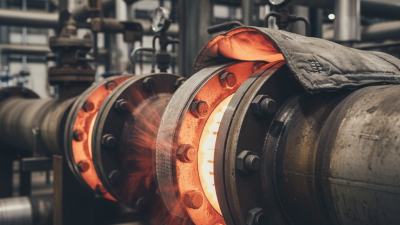
What are Rubber Heaters and How Do They Work?
Rubber heaters are versatile devices used in various industries. They provide consistent heat through flexible rubber materials, making them ideal for different applications. John Smith, an expert in thermal technologies, once said, "Rubber heaters transform heat through flexibility and innovation."
These heaters work by using electric resistance to generate heat. The heat is distributed evenly across the surface. This makes rubber heaters suitable for challenging environments. They are often used in manufacturing, aerospace, and automotive sectors. However, understanding their design and operation can be complex.
Not all rubber heaters perform the same. Factors like material quality and power distribution matter. Sometimes, installations can be flawed, leading to uneven heating. Users need to reflect on their specific needs. Learning from past mistakes is crucial for achieving optimal performance. Rubber heaters can deliver effective solutions, but only if used correctly.
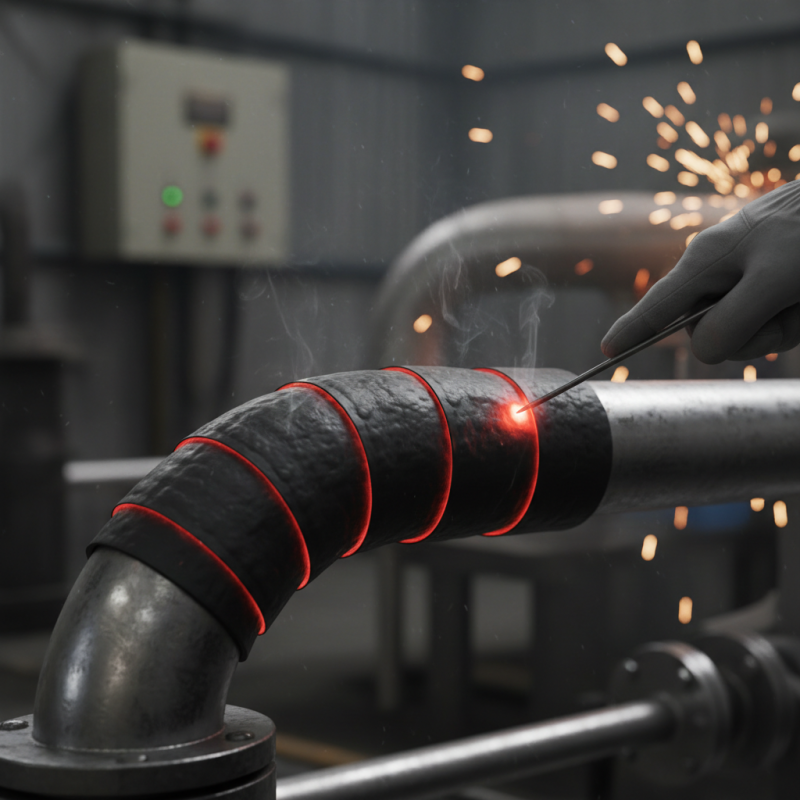
Overview of Rubber Heaters and Their Applications
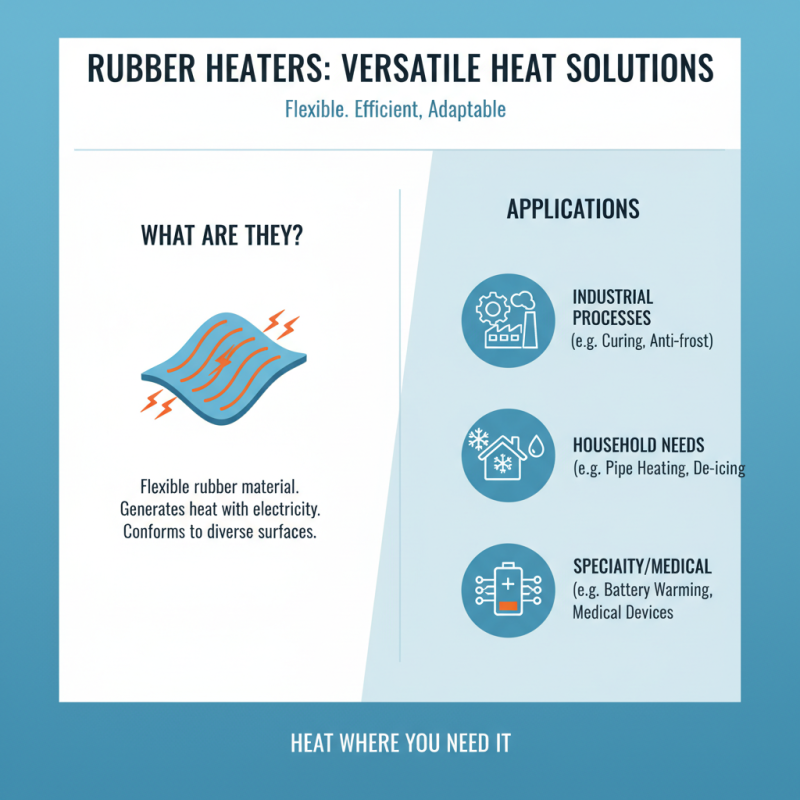
Rubber heaters are versatile devices. They are made of flexible rubber material that can generate heat when electricity passes through. These heaters are used in various applications, from industrial processes to household needs. Thanks to their flexibility, they can easily contour to different surfaces, making them valuable in diverse settings.
In industrial environments, rubber heaters often warm tanks and pipes. They ensure fluids flow smoothly, even in cold weather. Some manufacturers use them for drying or curing processes. Other sectors find rubber heaters handy for outdoor equipment heating. They manage to provide heat where traditional heaters might fail.
Household applications exist too. Rubber heaters can thaw frozen pipes or keep pet shelters warm during winter. Their compact design allows for easy storage and transport. However, it’s essential to use them correctly to avoid overheating or damage. Reading instructions is crucial for safe operation. Users should reflect on their specific needs and evaluate the rubber heater's suitability for their intended use.
Understanding the Composition and Design of Rubber Heaters
Rubber heaters are versatile devices used in various industries. Understanding their composition and design is essential. These heaters typically consist of a layer of flexible rubber material. This layer often contains embedded heating elements that generate heat when electric current passes through. The design allows for even heat distribution, making them suitable for a wide range of applications.
One important aspect is the thickness of the rubber layer. A thicker layer may provide better insulation but can delay heat transfer. Conversely, a thinner layer ensures quick heating but might not retain heat well. Finding the right balance is crucial for efficiency.
Tips: Consider the application temperature range before choosing a rubber heater. Not all heaters can withstand high temperatures. Also, keep in mind the shape and size of the area that needs heating. Sometimes, custom designs are necessary for optimal performance.
It's vital to ensure proper installation. Misalignment can lead to uneven heating or damage. Regular maintenance checks are also recommended. These aspects can sometimes be overlooked but are crucial for the longevity of the heater. Reflecting on the design choices can lead to better performance and safety.
The Principles of Heat Generation in Rubber Heaters
Rubber heaters are unique devices that generate heat using the principles of resistive heating. They consist of conductive materials embedded within flexible rubber. When electricity passes through these materials, resistance produces heat. This process efficiently warms the heater's surface, making it effective for various applications.
The design of rubber heaters allows for uniform heat distribution. The surface can reach specified temperatures quickly. However, not every design achieves optimal performance. Energy loss can occur if the resistance is not accurately tailored to the application. This inefficiency can lead to higher energy costs and uneven heating.
In practice, understanding the principles of heat generation is crucial. Variations in thickness or inconsistencies in materials impact heat performance. Monitoring temperature can help avoid overheating, which can damage the heater. Learning from these aspects is essential for better heater design and usage. With careful consideration, rubber heaters can provide reliable and efficient heating solutions.
Advantages and Limitations of Using Rubber Heaters
Rubber heaters are versatile devices used for a variety of heating applications. They are designed to provide consistent heat while being flexible and durable. However, like any technology, they come with their own set of advantages and limitations.
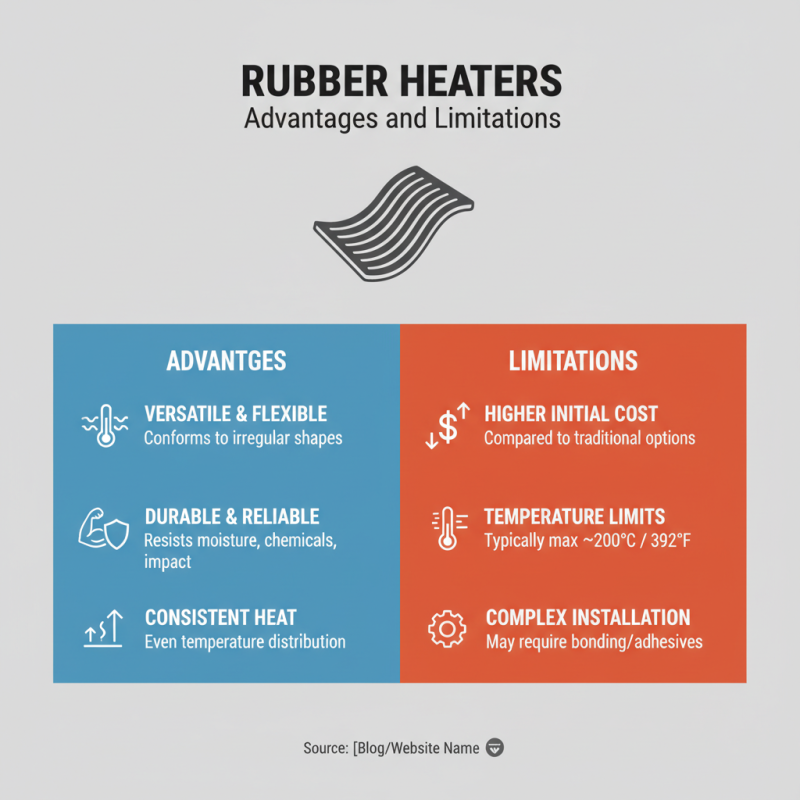
One significant advantage of rubber heaters is their flexibility. They can be easily wrapped around components or placed in tight spaces. This adaptability allows for more efficient heating in industrial applications. According to a report from the Industrial Heating Association, rubber heaters can provide up to 95% thermal efficiency. This means less energy wasted during operation. Additionally, they are often resistant to moisture and chemicals, broadening their usability in different environments.
Conversely, rubber heaters also have limitations. While they are effective for medium heat applications, they may not perform well in extreme temperature settings. Their lifespan can be shorter than traditional heating methods. The heating elements may degrade over time, particularly if used continuously in high-demand situations. Also, proper installation is crucial. Poor application can lead to uneven heating, which might cause overheating. Regular maintenance is essential to avoid unexpected failures. A 2022 study indicated that 15% of rubber heater failures were due to improper usage. Understanding these factors is critical for anyone considering rubber heaters for their heating needs.
Safety Considerations and Maintenance for Rubber Heaters
Rubber heaters are widely used for various applications, but safety considerations cannot be overlooked. One important aspect is ensuring proper installation. If not installed correctly, they can overheat or malfunction, leading to potential hazards. Always follow manufacturers' guidelines and avoid using damaged heaters. Regular inspections are crucial. Look for any signs of wear, cracks, or fraying.
Maintenance is key to prolonging the life of rubber heaters. Clean them regularly to prevent debris buildup, which can affect performance. Check the power supply connections as well. Loose connections can cause sparks or failures. Avoid using them in wet or damp environments, as moisture can lead to electrical issues.
While rubber heaters are effective, they require attention. Pay close attention to operating temperature limits. Exceeding these limits can cause damage. Also, be aware of the specific needs of the equipment they are connected to. Each setup may have unique considerations that need addressing. Make it a habit to review safety protocols routinely. This reflection can prevent potential accidents and ensure efficient operation.
What are Rubber Heaters and How Do They Work? - Safety Considerations and Maintenance for Rubber Heaters
| Dimension |
Description |
| Material |
Silicone or rubber compounds that provide flexibility and durability. |
| Working Principle |
They work by converting electrical energy into heat through resistance when electricity passes through the heating element. |
| Temperature Range |
Typically from -60°C to +200°C (-76°F to +392°F), depending on the material. |
| Applications |
Used in various industries including automotive, aerospace, and food processing to provide warmth and maintain temperature. |
| Safety Considerations |
Avoid overheating, inspect for damage before use, and ensure proper installation to prevent electrical hazards. |
| Maintenance |
Regular cleaning, checking for wear and tear, and electrical testing to ensure safe operation. |