How to Choose the Right Heater Element for Your Heating Needs?
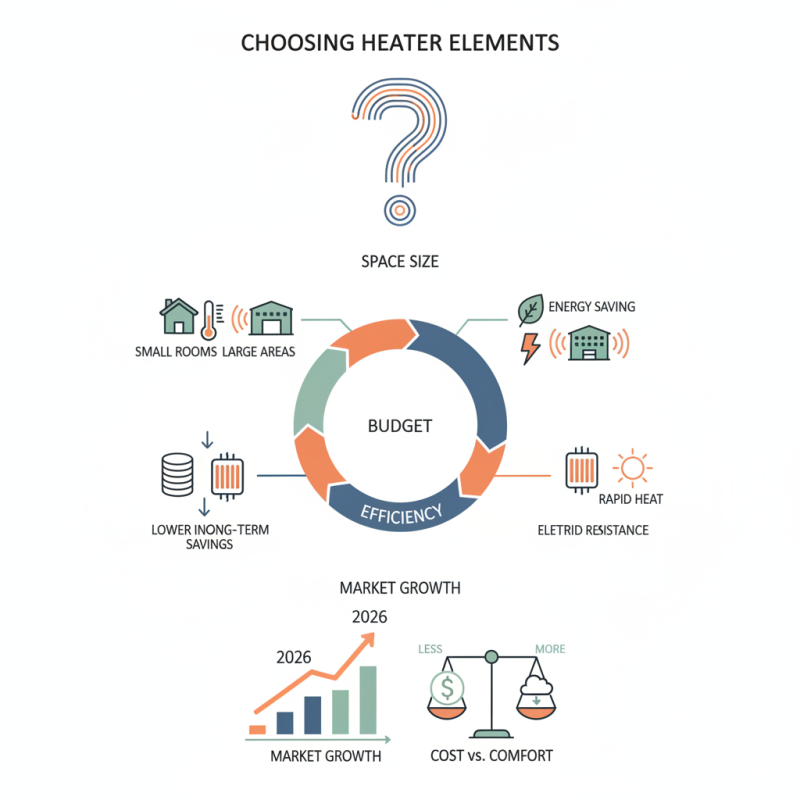
Choosing the right heater element for your heating needs is crucial. The heating element market is projected to grow significantly, expected to reach $25 billion by 2026, according to a recent industry report. As energy efficiency becomes vital, selecting an optimal heater element can impact both comfort and costs.
Different heater elements serve unique purposes. For instance, electric resistance heaters typically provide quick heating but may lead to higher energy bills. In contrast, infrared elements efficiently heat spaces with lower power consumption.
Understanding your needs is essential. Are you heating a large space or a small room? What is your budget? Each choice in heater elements can require a careful decision to avoid potential inefficiencies. Selecting the right element is not always straightforward, and some may find the available options overwhelming. Reflection on your actual heating requirements can lead to better choices.
Understanding Your Heating Needs and Requirements
When selecting a heater element, understanding your heating needs is critical. Different spaces have unique requirements. Residential zones often need a low wattage. Commercial areas may require higher outputs.
Research indicates that up to 45% of energy use in households goes to heating. This means efficiency is vital. Identifying insulation quality, room size, and usage can guide your choice. A larger space may warrant more powerful elements to maintain warmth. Conversely, smaller areas can benefit from less intensive heating solutions.
Take time to evaluate your specific situation. Look at your energy costs and how often you need heating. Many people find themselves underestimating their needs. This can lead to chilly environments or soaring energy bills. Being aware of safety regulations and local climate is also crucial. Ignoring these factors can lead to inefficient and unsafe heating.
How to Choose the Right Heater Element for Your Heating Needs?
| Heater Type |
Best For |
Energy Efficiency |
Cost |
Lifespan |
| Ceramic Heater |
Small rooms or personal use |
High |
$$ |
5-10 years |
| Oil-filled Radiator |
Medium to large rooms |
Medium |
$$$ |
10-15 years |
| Infrared Heater |
Workshops or outdoor spaces |
High |
$$$ |
10-20 years |
| Fan Heater |
Quick heating in small areas |
Medium |
$ |
3-5 years |
| Baseboard Heater |
Whole-home heating |
Medium |
$$ |
20+ years |
Types of Heater Elements: An Overview
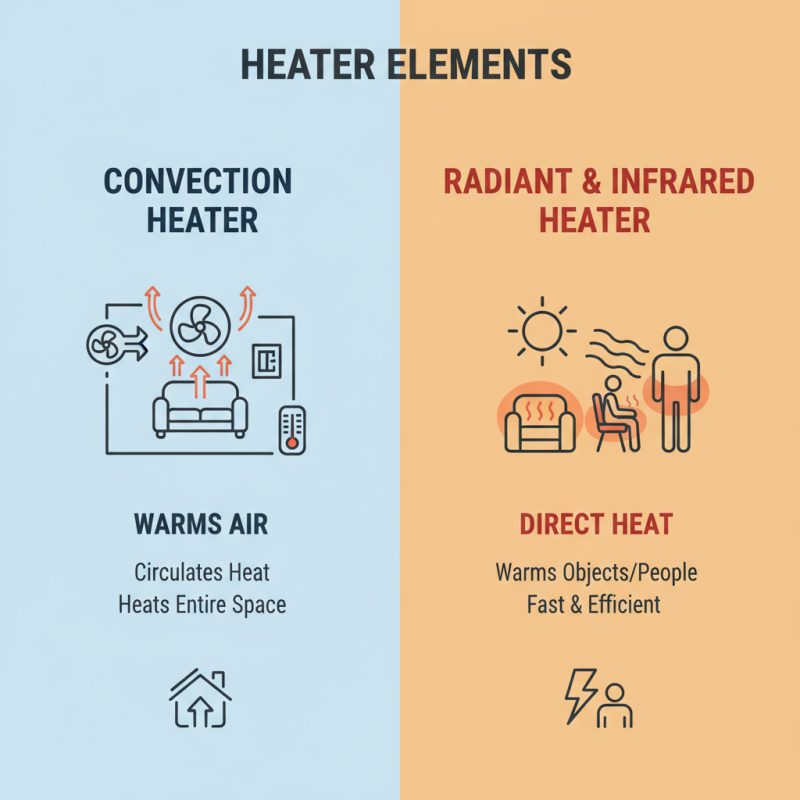
When selecting a heater element, it's essential to understand the various types available. Common options include convection, radiant, and infrared heater elements. Each serves distinct heating needs and environments. Convection heaters warm air, which circulates throughout the space. Radiant heaters, on the other hand, emit infrared heat. This directly warms objects and people without the need to heat the entire air volume. Infrared heaters are often energy-efficient and quick to deliver warmth.
Consider the area you need to heat. If it’s a small space, a radiant heater might suffice. For larger areas, convection heaters may provide more consistent warmth. Don't be afraid to mix and match heater types as needed. Sometimes, a combination of heater elements can create an optimal environment.
**Tip:** Before purchasing a heater, assess your energy costs. Efficient heaters can save you money over time.
Remember, installation matters. Proper placement ensures maximum efficiency. If a heater is in a corner, it might not function well.
**Tip:** Regular maintenance can extend heater life. Dust and debris can hinder performance. Keep your heater clean and check it periodically.
Factors to Consider When Choosing a Heater Element
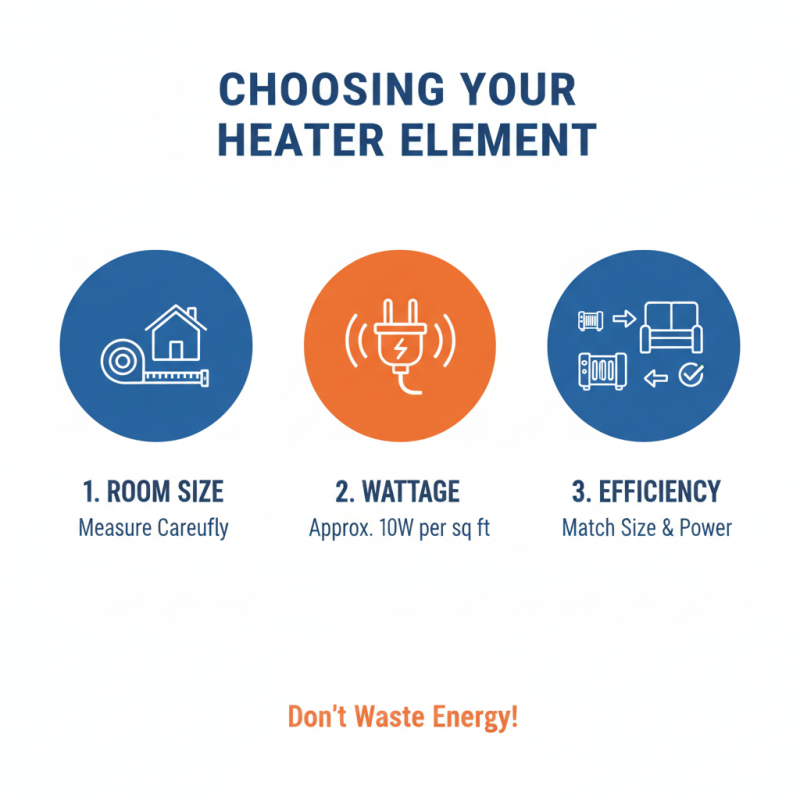
Choosing the right heater element involves several factors. The size of the space is crucial. Measure your room carefully. A small heater won't suffice for a large area. Conversely, an oversized heater can waste energy. Consider the wattage required for effective heating. For example, you may need about 10 watts per square foot.
Next, think about the type of heating you prefer. Some people like radiant heat for quick warmth. Others prefer convection heaters that warm the air gradually. Assess your heating needs based on your lifestyle. Do you want consistent warmth, or is occasional heating sufficient?
Take energy efficiency into account. Look for options that offer good insulation. Poor insulation can lead to heat loss. It's frustrating to heat a space, only to feel cold drafts. While cheaper options seem appealing, they might lead to higher utility bills. Reflect on your long-term efficiency goals. Quality often outweighs upfront costs.
Assessing Energy Efficiency and Power Ratings
When selecting a heater element, energy efficiency and power ratings play a crucial role. Energy efficiency indicates how well a heater converts electricity into heat. Higher ratings mean less wasted energy. It’s essential to check these ratings before making any decisions.
Tip: Look for a heater with an energy rating of at least A. This ensures better performance and lower electricity bills.
Power ratings are equally important. They determine the amount of heat the heater can produce. Choose a heater that matches the size of your space. If the power is too low, it will struggle to heat the area effectively. Conversely, a heater that’s too powerful may lead to overheating.
Tip: Measure your space before shopping for a heater. This can help avoid frustration later. Remember, energy efficiency is not just about savings. Sometimes, less efficient models may offer better immediate results. Always weigh your options.
Energy Efficiency of Different Heater Elements
This chart illustrates the energy efficiency ratings of various heating elements based on their power consumption and output. The data highlights the balance between energy usage and heating effectiveness, helping you choose the right heater for your needs.
Maintenance and Longevity of Heater Elements
Maintaining your heater element is crucial for efficiency and longevity. Regular upkeep can prevent early failures and unnecessary replacements. A well-maintained heater can save up to 30% on energy costs, according to industry reports. A key aspect is cleaning the heater regularly to remove dust and debris, which can hinder performance.
Tips: Check for wear and tear. Look for any signs of corrosion. A simple visual inspection can give you a lot of information about its health.
Properly sizing your heater element impacts its lifespan. An oversized heater works harder, leading to quicker burnout. Conversely, an undersized heater struggles to maintain temperature, resulting in increased wear. It's essential to assess your heating needs accurately to avoid these pitfalls.
Tips: Use power consumption data to guide your choice. Don’t ignore manufacturer specifications; they can help you avoid mismatches. Remember, replacing a heater element may not always be the end, but neglecting it often leads to costly repairs.