Choosing a reliable supplier matters when a Heater Tubular element must perform inside ovens, tanks, cabinets, or industrial air systems. A polished website is not enough. Buyers should examine material grades, watt density, insulation quality, terminal construction, temperature tolerance, and documented testing. Small details matter. A loose ceramic bead or poorly sealed terminal can stop production.
Robert Bean, an ASHRAE Fellow and building-science educator, has stated, “A heating system is only as good as its control.” That principle also applies to tubular heaters. Even a well-built element may fail early when sensors, thermostats, airflow, or installation conditions are poorly matched. This guide reviews ten Heater Tubular suppliers for global buyers, focusing on manufacturing experience, customization, quality systems, export capability, and technical support.
The evaluation considers more than price. It looks at traceability, response speed, sample policies, compliance documentation, and after-sales service. Suppliers that can explain their testing process deserve closer attention. So do manufacturers that provide clear drawings and realistic delivery dates. Buyers should still verify every claim independently. No ranking can replace a site assessment or a properly specified sample.
There is no perfect supplier.
A heater designed for a food-processing line may be unsuitable for a humid chemical environment. Likewise, a low-cost option may become expensive after repeated failures, delayed shipments, or difficult replacements. The strongest choices combine dependable construction with practical communication. This overview aims to make that comparison easier, while recognizing that regional standards, operating conditions, and project budgets can change the final decision.
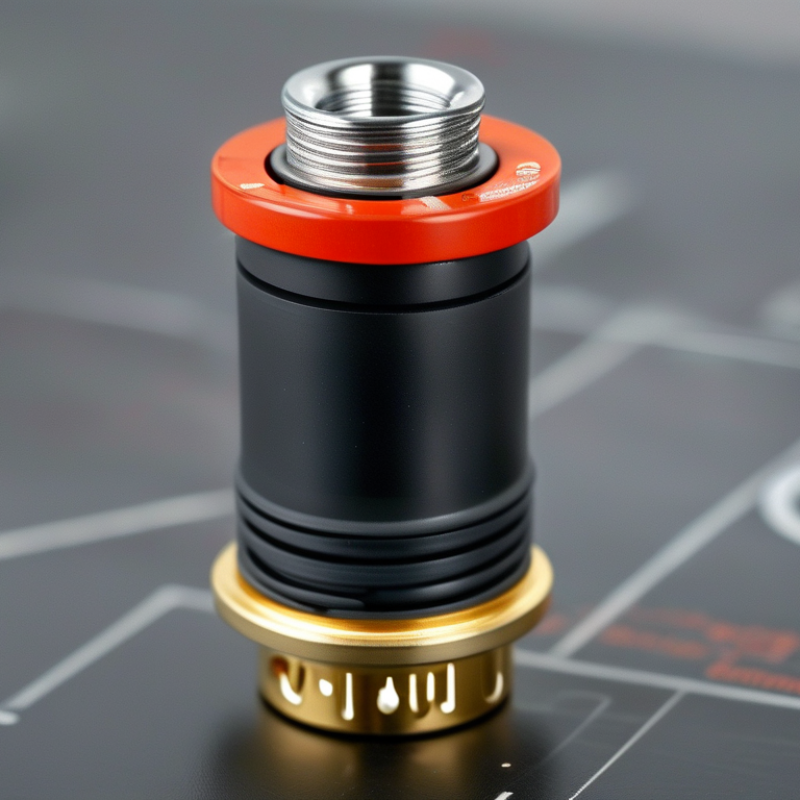
Tubular heaters are compact electric heating elements built around a resistance wire. A metal sheath surrounds compressed magnesium oxide insulation. When electricity passes through the wire, heat travels through the sheath and into the surrounding material. Common sheath materials include stainless steel, copper, and corrosion-resistant alloys. The choice depends on moisture, chemicals, temperature, and the heated medium.
These heaters appear in ovens, water tanks, air curtains, vending equipment, dishwashers, and industrial drying systems. They can heat air, water, oil, or metal surfaces. In a commercial oven, a bent tubular element may run along the chamber wall. In a water tank, it may sit below the fluid line. Immersion models need correct placement and reliable grounding. Dry-firing can damage them within minutes.
For global buyers, supplier evaluation should include wattage tolerance, insulation resistance, sheath temperature, and bending limits. I would also request dimensional drawings and batch test records. Small details matter. A terminal connection that looks secure may loosen under vibration. Poor sealing can allow moisture inside. This is where many specifications become unclear, and buyers should question them. Thermal mapping under real operating conditions is more useful than a single catalog temperature. Local voltage, frequency, installation space, and replacement access must also be checked before production. A heater that fits the drawing may still perform poorly in the finished machine.
Choosing tubular heater suppliers requires more than comparing price per piece.
The IEA’s Energy Efficiency 2023 report identifies industry as responsible for about 37% of global final energy use. This makes watt density, heat transfer, and service life important purchasing factors. Ask suppliers for resistance tolerances, insulation resistance results, dielectric-strength tests, and operating-temperature limits. A credible supplier should explain how sheath material, element diameter, and mounting position affect performance.
Quality systems matter, but certificates need careful reading.
The ISO Survey 2023 recorded more than 1.2 million ISO 9001 certificates worldwide. That figure shows certification is common, not automatically meaningful. Check the certificate scope, issuing body, renewal date, and manufacturing site. Request batch traceability, inspection records, and a sample test report linked to the exact heater design. Small details expose weak control.
Test before scaling.
Use a pilot batch in the real air, oil, water, or mold environment. Measure warm-up time, surface temperature, power stability, and cycling performance. Ask for thermal maps, not only catalog values. Also review packaging, export documents, lead times, spare-element availability, and warranty exclusions. The cheapest offer can become expensive after one failed shipment. A polished document is not proof. Supplier evaluation is partly technical judgment, and partly the willingness to question attractive claims.
For global buyers, the best tubular heater suppliers offer more than low prices. Their strengths include stable heating performance, accurate dimensions, and responsive technical support. A practical top-ten shortlist should include suppliers with different capabilities. One may specialize in custom-shaped heaters. Another may focus on fast production. A third may provide strong corrosion resistance. Others may excel in laboratory heating, food equipment, air heating, water heating, high-temperature systems, or large industrial orders. The tenth supplier may stand out through flexible minimum quantities and export experience.
Experienced buyers should examine test reports, insulation quality, weld consistency, and terminal protection. Ask how each supplier controls resistance tolerance during production. Clear drawings and sample approvals reduce costly misunderstandings. Reliable suppliers explain lead times honestly and provide traceable inspection records. They should also discuss packaging for long-distance transport. A damaged terminal or bent tube can delay installation. No supplier is perfect. Even a capable factory may need design feedback when the application changes. That uncertainty deserves attention, not polite assumptions.
Tips: Request one sample before placing a large order. Compare temperature uniformity, surface finish, and connector strength. Check whether the supplier can reproduce the sample after several months. Confirm voltage, wattage, tube material, operating temperature, and mounting details in writing. Keep communication records. A cheap quotation may hide replacement costs, testing delays, or weak after-sales support.
Choosing among the 10 best tubular heater suppliers requires more than comparing catalog prices. Quality begins with stable alloy selection, uniform resistance wire placement, and sealed terminals. In practical audits, I check insulation resistance, dielectric strength, wattage tolerance, and surface-temperature consistency. A heater that looks identical may fail earlier under moisture, vibration, or repeated thermal cycling. The International Energy Agency reported 2.2% global energy-efficiency progress in 2022, making efficient heat transfer increasingly important for industrial buyers.
Customization separates capable suppliers from simple resellers. Confirm the tube diameter, heated length, voltage, wattage, lead direction, mounting hardware, and operating atmosphere in writing. Ask for drawings before production. Small errors matter. A five-millimeter mismatch can delay installation. Suppliers should provide traceable test records, material certificates, and samples from the actual production process. ISO’s 2022 survey recorded more than one million ISO 9001 certificates worldwide, but certification alone does not prove heater performance. Factory controls still need verification.
Pricing should include tooling, sampling, packaging, freight, failure replacement, and minimum-order requirements. The lowest quotation is often incomplete. I have seen buyers overlook connector upgrades and export testing costs. For global shipments, review ISO 9001 systems, IEC 60335-1 safety alignment where applicable, RoHS documentation, and destination-market conformity requirements. Independent laboratory reports add credibility. Ask how nonconforming units are isolated and corrected. A supplier with clear corrective-action records may be safer than one offering a dramatic discount. No comparison is perfect; application-specific testing remains the most reliable decision point.
Before ordering tubular heaters, global buyers should verify the working environment, not just the wattage. Ask for voltage tolerance, sheath material, insulation resistance, surface temperature, and expected service life. A heater installed inside a damp stainless-steel tank needs different protection from one used in dry air. Check drawings carefully. A two-millimeter error can prevent proper fitting.
The U.S. Department of Energy states that electric resistance heating converts nearly all incoming electricity into heat at the point of use. Efficiency still depends on control accuracy and heat loss. The IEA’s Energy Efficiency 2023 report says efficiency improvements could deliver more than 40% of the emissions reductions needed by 2030. Request test records, including wattage deviation, dielectric strength, leakage current, and temperature-rise results. Certification should match the destination market, with relevant IEC 60335, IEC 60529, or industrial safety requirements reviewed by a qualified engineer.
Supplier evaluation needs evidence. Request a traceable material certificate for the sheath and terminal components. Confirm batch numbers, inspection procedures, packaging, and replacement support. Export packaging should protect ceramic parts from vibration and moisture. Sample testing is useful, but it can mislead. Production consistency matters more. Ask for recent quality records, yet remember that paperwork alone cannot reveal weak welds or uneven insulation. A small pilot order may expose problems before a full shipment. Budget pressure can make buyers skip it. That decision deserves reconsideration.
| Rank | Anonymous Supplier Profile | Typical Product Focus | Common Sheath Materials | Typical Voltage Range | Typical Power Range | Common Tube Diameters | Heating Element Options | Customization Capability | Indicative Production Lead Time | Documents to Request Before Ordering |
|---|---|---|---|---|---|---|---|---|---|---|
| 1 | Supplier Profile A | High-volume industrial tubular heaters for ovens, air heaters, tanks and process equipment | Stainless steel, nickel-based alloy, carbon steel | 110–480 V AC | 300–10,000 W per assembly | 6.5–20 mm | Single-ended and double-ended elements; grounded or ungrounded designs | High Custom length, bends, terminals and mounting parts |
Approximately 4–8 weeks after drawing approval | Technical drawing, datasheet, material certificate, routine test report, packing list and commercial invoice |
| 2 | Supplier Profile B | Immersion heaters for water, oil, chemical and process-fluid applications | 304/316 stainless steel, copper, nickel-based alloy | 120–480 V AC | 500–12,000 W per assembly | 8–20 mm | Flanged, threaded, screw-plug and circulation-heater configurations | High Wetted-length, flange, thermostat and sensor options |
Approximately 5–9 weeks after final specification | Wetted-material declaration, insulation-resistance test, dielectric-strength test and pressure-test requirements |
| 3 | Supplier Profile C | Air duct, HVAC and ventilation heating assemblies | Stainless steel, Incoloy-type nickel alloy, galvanized steel for non-corrosive areas | 200–600 V AC | 1–30 kW per bank | 8–16 mm | U-shaped, W-shaped and finned tubular elements | Medium–High Custom frame, airflow direction, control stages and safety cut-outs |
Approximately 4–7 weeks for standard designs | Airflow and watt-density calculations, wiring diagram, terminal-temperature data and control recommendations |
| 4 | Supplier Profile D | Oven, furnace and bakery-equipment heating elements | Stainless steel and nickel-based alloy suitable for elevated temperatures | 110–480 V AC | 250–8,000 W per element | 6.5–16 mm | Straight, bent, shaped and finned elements with ceramic or metal supports | High Three-dimensional bending and application-specific mounting |
Approximately 5–10 weeks depending on tooling | Maximum operating-temperature data, surface-load calculation, dimensional inspection report and sample approval record |
| 5 | Supplier Profile E | Low-watt-density heaters for tanks, cabinets, condensation control and freeze protection | Stainless steel, aluminum-sheathed and copper-sheathed options | 110–277 V AC | 50–2,000 W per assembly | 6.5–12 mm | Anti-condensation heaters, cabinet heaters and surface-mounted tubular designs | Medium Custom length, bracket position and thermostat integration |
Approximately 3–6 weeks for standard configurations | Temperature-control range, ingress-protection information, insulation test results and installation instructions |
| 6 | Supplier Profile F | High-temperature heaters for industrial machinery and thermal-processing equipment | Nickel-based alloy, stainless steel and heat-resistant steel grades | 220–690 V AC | 1–20 kW per assembly | 8–20 mm | High-temperature straight and formed elements with specialized terminal protection | High Material selection, hot-zone control and specialized terminals |
Approximately 6–12 weeks | Temperature-cycle data, metallurgy certificates, resistance-tolerance report and thermal-expansion considerations |
| 7 | Supplier Profile G | Compact cartridge-style and tubular heaters for packaging and light industrial equipment | Stainless steel and nickel-based alloy | 12–240 V AC/DC | 50–2,500 W per heater | 6–16 mm | Cartridge-compatible tubular designs, single-ended elements and sensor-ready heaters | Medium–High Custom diameter, cold length, lead wires and connectors |
Approximately 3–8 weeks | Resistance tolerance, dielectric-strength test, lead-wire specification and dimensional inspection report |
| 8 | Supplier Profile H | Heaters for food-processing, washdown and corrosive industrial environments | 316/316L stainless steel and other corrosion-resistant alloys | 110–480 V AC | 300–15,000 W per assembly | 8–20 mm | Immersion, circulation, washdown-rated and hygienic-design assemblies | High Surface finish, hygienic fittings, drainability and custom mounting |
Approximately 5–10 weeks | Material traceability, surface-finish specification, cleanability information, leak test and electrical safety report |
| 9 | Supplier Profile I | OEM replacement and small-batch tubular heater production | Stainless steel, copper and carbon steel, subject to application | 12–480 V AC/DC | 50–5,000 W per assembly | 6.5–16 mm | Replacement elements, legacy-form-factor heaters and low-volume prototypes | High Reverse engineering based on samples, drawings or photographs |
Approximately 2–6 weeks for prototypes; 4–9 weeks for production | First-article inspection report, approved drawing, resistance measurement and change-control procedure |
| 10 | Supplier Profile J | Export-oriented custom heater assemblies for distributors and system integrators | Stainless steel, nickel-based alloy and application-specific sheath materials | 100–600 V AC | 100–25,000 W per assembly | 6.5–20 mm | Immersion, air, oven, duct, flange and multi-element assemblies | High Private-label packaging, multilingual documents and consolidated shipments |
Approximately 4–10 weeks, excluding shipping time | Certificate of origin, commercial invoice, packing list, HS-code confirmation, test report and export packaging specification |