2026 Best Hot Oil Heater Options for Efficient Heating Solutions?
When considering efficient heating solutions, Hot Oil Heaters stand out for their effectiveness. These systems utilize thermal fluids to transfer heat efficiently, making them ideal for industrial applications. Hot Oil Heaters can significantly improve energy efficiency, particularly in processes requiring stable temperatures.
In 2026, the market offers a range of options tailored to various needs. Choosing the right Hot Oil Heater requires careful evaluation of your specific requirements, including temperature range and system capacity. Users often face challenges in selecting models that ensure reliability without excessive energy waste.
Although Hot Oil Heaters provide numerous benefits, not every option may suit your application perfectly. It's essential to weigh the pros and cons of each model. The right choice can enhance productivity, while an unsuitable one may lead to inefficiencies. This guide will explore the best options available, helping you make an informed decision for your heating needs.
Key Features to Consider in Hot Oil Heaters for 2026
When selecting a hot oil heater for efficiency in 2026, several key features must be considered. The system's heat transfer efficiency is critical. A report from the American Society of Heating, Refrigerating and Air-Conditioning Engineers (ASHRAE) states that systems with higher thermal conductivity can reduce energy consumption by up to 30%. This means a better return on investment over time.
Thermal stability is another important factor. Choose heaters that can maintain consistent temperatures without overheating. A study from the International Energy Agency highlighted that unstable temperature control could lead to a 15% reduction in system performance.
Tip: Regular maintenance can enhance performance. Ensure pumps and valves are checked periodically.
Look for features like safety controls and user-friendly interfaces. Automated systems can help in monitoring and can adapt to real-time changes. These enhancements can improve both safety and reliability. The right selection can minimize risks, making operations smoother.
Tip: Don’t overlook energy efficiency ratings. A small difference can lead to significant savings in operation costs.
Investing time in understanding these features ensures effective heating solutions for your needs in 2026.
Industry Standards and Regulations Impacting Hot Oil Heating Systems
Regulations governing hot oil heating systems play a crucial role in ensuring safety and efficiency. Various industries must comply with these standards to prevent accidents and inefficiencies. Key guidelines pertain to materials used, installation practices, and operational protocols. These regulations are not static; they evolve based on technological advancements and case studies of past failures.
Many facilities struggle to keep up with the fast pace of regulation changes. Some companies overlook proper training, leading to unsafe practices. A well-designed heating system must consider not only compliance but also operational efficiency. Simplifying complex regulations can often result in misunderstandings.
Investing in ongoing training for staff is critical. This helps facility managers stay ahead of compliance requirements. Adopting a proactive approach can minimize risks and enhance reliability. Moreover, evaluating the latest technologies can improve heating performance. Regular audits and assessments can identify gaps in compliance. While navigating regulations can be daunting, it ultimately supports safer and more efficient heating solutions.
2026 Best Hot Oil Heater Options for Efficient Heating Solutions
| Model |
Heating Capacity (kW) |
Max Temperature (°C) |
Efficiency (%) |
Compliance Standards |
| Model A |
150 |
350 |
90 |
ISO 9001, ASME |
| Model B |
200 |
320 |
85 |
UL, CE |
| Model C |
250 |
400 |
92 |
API, EN 13445 |
| Model D |
100 |
300 |
88 |
ISO 14001 |
Comparative Efficiency Ratings of Top Hot Oil Heater Models
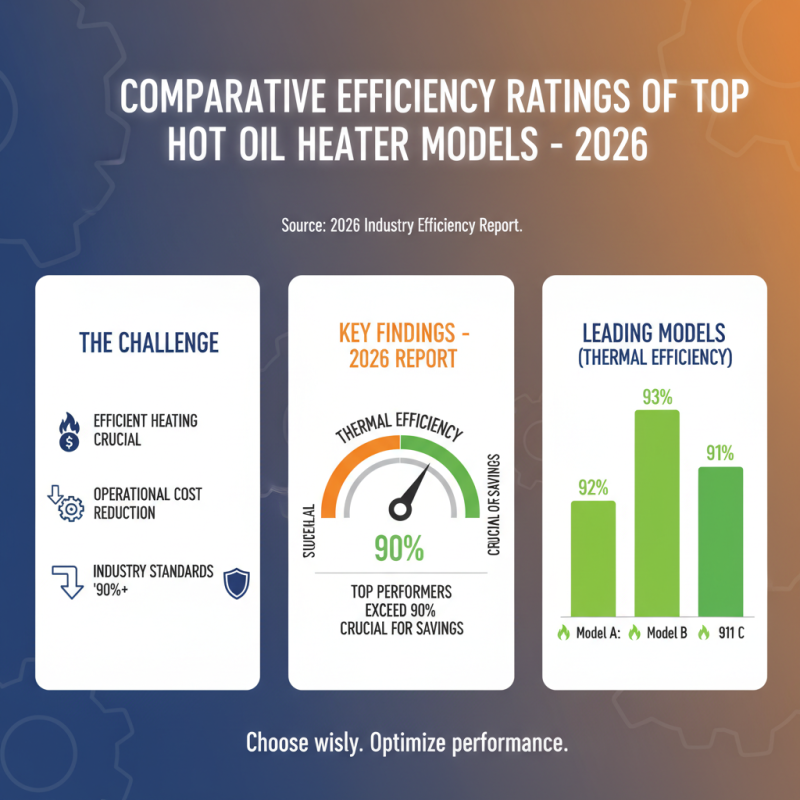
When seeking efficient heating solutions, evaluating hot oil heaters becomes essential. In 2026, various models claim to provide superior performance. Efficiency ratings play a key role in determining which heaters meet industry standards. A recent efficiency report found that the best-performing hot oil heaters achieve thermal efficiencies above 90%. This performance is crucial for reducing operational costs.
Interestingly, not all models deliver consistent results. For instance, some heaters with high initial efficiency ratings struggle during long-term operations. They may lose effectiveness due to heat loss in circulating systems. Moreover, maintenance schedules can significantly impact efficiency. A study revealed that neglected systems can drop efficiency by 15% over two years. Such data prompts users to weigh their options carefully.
Choosing a model also involves understanding energy consumption dynamics. More advanced heaters may offer lower energy costs per unit of heat delivered. However, upfront costs can deter some buyers. An average hot oil heater costs around 20% more than older models but promises better long-term savings. This duality complicates decision-making processes. Each model's claims warrant scrutiny to ensure reliable and efficient heating solutions.
Innovative Technologies Enhancing Hot Oil Heating Performance
Hot oil heating systems have evolved significantly, integrating innovative technologies that enhance their efficiency and performance. Modern systems utilize advanced thermal oils, which can withstand higher temperatures without breaking down. This feature improves the overall heating process, allowing for consistent temperatures across systems. The use of high-performance pumps ensures optimal circulation, contributing to faster heat transfer and reduced energy consumption.
Another notable advancement is the integration of smart controls. These systems allow for remote monitoring and tuning, optimizing the heating process in real time. Users can make adjustments based on specific requirements or operational demands, leading to improved safety and efficiency. However, this technology requires constant attention to function optimally. It can become overwhelming for some users.
Yet, as with any system, challenges persist. Not all users may grasp the complexities of these new technologies. Training and education are essential to fully leverage the benefits. Additionally, maintenance can be overlooked, leading to inefficiencies. Understanding the balance between innovative technologies and traditional heating practices can help users achieve optimal performance.
Cost-Effectiveness Analysis of Leading Hot Oil Heater Options
When evaluating hot oil heaters, cost-effectiveness is paramount. Industry reports indicate that the operational efficiency of these heaters can impact long-term expenses significantly. Efficient hot oil heating systems can reduce energy consumption by up to 30%, translating into substantial savings over time. This efficiency often stems from advanced insulation and improved design, which maximize heat retention.
However, not all options are created equal. Installation costs can vary widely, and understanding the total lifecycle cost is essential. A recent study revealed that while some heaters may have a lower initial price, they often incur higher maintenance costs. Over a span of five years, these expenses could outweigh the savings from lower upfront costs. It’s crucial to analyze not only cost but also reliability and service frequency.
Furthermore, with the focus on sustainability, many facilities are re-evaluating their heating solutions. Performance data shows that transitioning to energy-efficient options could lead to a 25% reduction in carbon footprint. Such shifts are not just cost-effective but also environmentally responsible. However, the upfront investment may be a hurdle for some companies, making strategic planning essential. Taking a holistic view may reveal more sustainable and cost-effective solutions in the long run.
2026 Best Hot Oil Heater Options for Efficient Heating Solutions