Best Asphalt Heater for Efficient Road Repair Solutions?
The demand for efficient road repair solutions is increasing in urban areas. A reliable Asphalt Heater is crucial for timely repairs. According to the National Asphalt Pavement Association, high-quality asphalt heating can improve the longevity of road surfaces by up to 30%. Experts note that improper heating can lead to material wastage, affecting project budgets.
Dr. Emily Carter, an asphalt technology specialist, emphasizes, "Proper heating is essential to ensure optimal material performance." Many road crews face challenges with existing heating methods. Some heaters may not maintain consistent temperatures, leading to potential project delays. The industry recognizes the need for innovative solutions that enhance both efficiency and effectiveness.
Investing in the best Asphalt Heater can significantly impact road repair outcomes. Crews must identify models that offer durability and user-friendly features. There are several options available, yet not all meet the required standards. It's essential to reflect on past experiences and prioritize equipment that aligns with project needs.
Understanding Asphalt Heaters and Their Importance in Road Repair
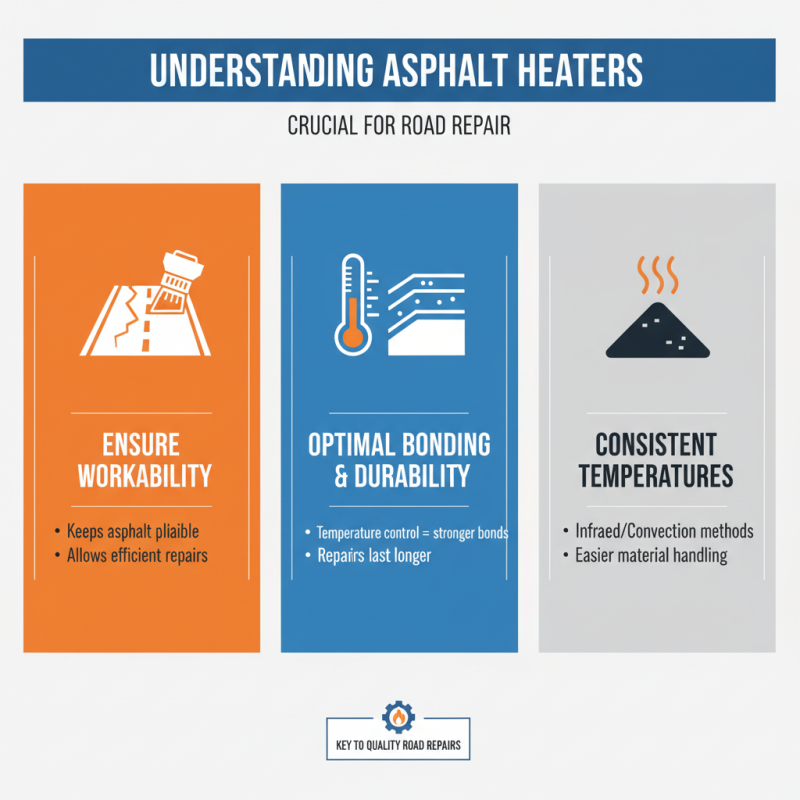
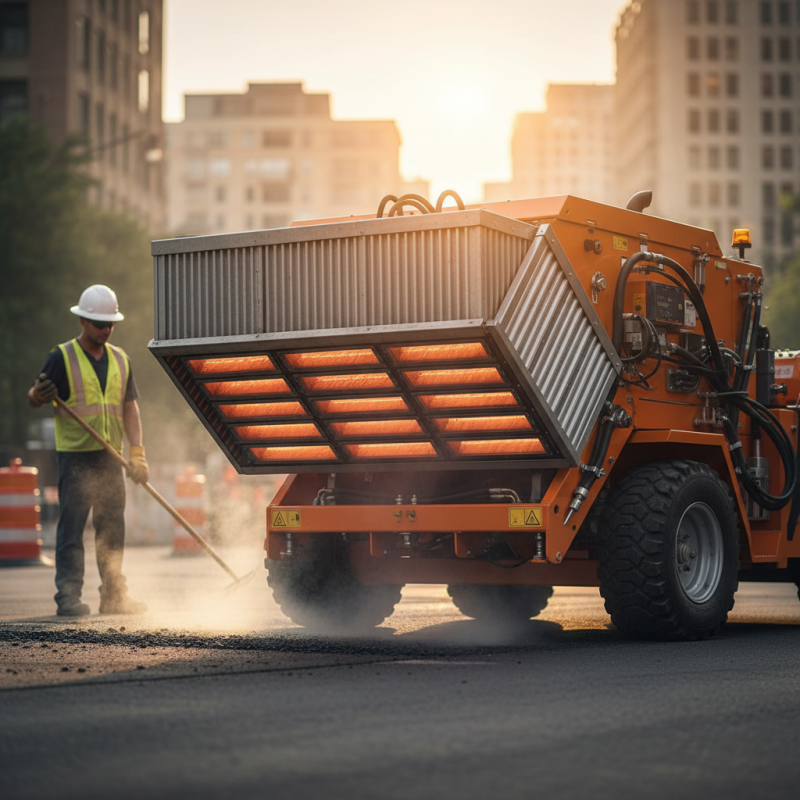
Asphalt heaters play a crucial role in road repair. They ensure that asphalt remains workable, allowing for efficient repair processes. When repairing roads, temperature control is vital. Properly heated asphalt bonds better and lasts longer. Asphalt heaters use infrared or convection methods to maintain consistent temperatures, making the material easier to handle.
Tips: Always monitor the heater's temperature closely. Too high temperatures can degrade the asphalt. Check the heater's performance regularly to ensure efficiency. Investing in a quality heater can save time and costs during road repairs.
Choosing the right asphalt heater depends on specific project needs. Consider factors like the size of the repair area and the ambient temperature. A portable heater may be ideal for small jobs, while larger, stationary heaters suit extensive repairs. It's important to evaluate the condition of existing equipment too. Regular maintenance ensures the heater operates effectively, reducing downtime.
Types of Asphalt Heaters: Infrared vs. Direct Fire Heaters
When considering asphalt heaters for road repair, the choice between infrared and direct fire heaters is crucial.
Infrared heaters use radiant heat technology. This means they warm the asphalt surface directly without affecting the underlying material. This offers an even heat distribution. It's essential for preventing temperature fluctuations, which can compromise road quality. However, they can be slower to reach optimal temperatures.
On the other hand, direct fire heaters emit flames directly onto the asphalt. This method heats asphalt more rapidly. It’s often used for large repair jobs needing quick turnaround times. However, there are potential risks. If not monitored closely, direct fire can lead to overheating, which damages the asphalt. Operators need to be trained to minimize these risks effectively.
Both types have their place in asphalt repair. The choice depends on job size and specific requirements. A thoughtful assessment is needed to select the right heater. Experience in the field enhances decision-making, ensuring efficient repairs and optimal road conditions. Each method has unique benefits and challenges that should not be overlooked.
Features to Consider When Choosing an Asphalt Heater
When selecting an asphalt heater for efficient road repair, several key features demand attention. The heating method is crucial. Indirect flame heaters are popular for uniform heating. They minimize the risk of damage to the asphalt. It’s essential to consider the heater's temperature range. A versatile heater can adapt to various asphalt types and weather conditions.
Portability is another important feature. Lightweight and compact designs facilitate easy transportation. This aspect can save significant time during repairs. Users also need to reflect on the heater's fuel efficiency. A well-designed heater should utilize fuel optimally, thus reducing operating costs.
Durability is a quality to consider. A robust construction withstands frequent use and harsh environments. Regular maintenance can extend the lifespan of the heater, allowing for consistent performance. However, users should remain aware of the limitations. They may encounter challenges in extreme weather or with certain asphalt mixtures. It’s crucial to conduct thorough research and seek expert knowledge before making a decision.
Top Recommendations for Asphalt Heaters in 2023
Asphalt heaters play a crucial role in road repair, especially in colder climates. These devices provide an efficient way to warm asphalt for immediate use. According to recent industry reports, proper heating can enhance the mix's workability and extend its lifespan. The ideal temperature for optimal asphalt application hovers around 300°F to 350°F.
In 2023, professionals are favoring heaters that offer portability and quick heating features. Some units heat up in under 30 minutes. These models also feature advanced insulation, reducing fuel consumption by 20%. However, the upfront costs can be high, which poses a challenge for smaller contractors.
Another aspect to consider is safety. Many heaters have built-in safety mechanisms, yet incidents still occur. Reports indicate that improper use causes around 15% of accidents related to asphalt heating. Ensuring that operators are trained and familiar with equipment is essential. Investing in high-quality asphalt heaters is commendable, but skimping on training can lead to regrettable outcomes. Proper maintenance is equally critical; neglected heaters can lead to uneven heating, affecting repair quality.
Best Practices for Operating Asphalt Heaters Efficiently
Operating asphalt heaters efficiently requires careful attention to detail. A well-maintained heater can significantly enhance the quality of road repairs.
Regular inspections are vital. Check for leaks, burn patterns, and insulation. This ensures consistent heat distribution. Without proper care, uneven heating can lead to poor asphalt performance.
Training operators is equally important. Skilled personnel can manage temperature controls effectively. They can adjust settings based on environmental conditions. Inconsistent operator practices may result in wasted fuel and time. Documenting procedures helps maintain standards. Encourage operators to share their experiences, as peer learning can enhance overall efficiency.
Moreover, understanding the paving mix is crucial. Different mixtures require specific temperatures for optimal bonding. If the temperature is too high, the asphalt may degrade. If it's too low, it may not adhere properly. Monitoring the asphalt's consistency during application is essential. Adjustments should be made based on real-time observations to ensure quality repairs. Experience in the field plays a significant role in mastering these techniques. Engaging with local experts can provide valuable insights for improvement.